The Golden Rule: The difference between routine care, preventive maintenance, and emergency repair comes down to timing. Routine care is wiping dust; preventive maintenance is replacing a €15 rubber gasket before it fails; repair is replacing a €2,000 ruined parquet subfloor after it leaks.
Routine Care vs. Preventive Maintenance vs. Repair
Homeowners often blend these three concepts together, but keeping them distinct clarifies your annual home budget:
- Routine Care: The constant, low-intensity tasks you do every week or month. Sweeping the patio, wiping kitchen surfaces, running self-clean cycles on dishwashers, and checking smoke alarm batteries.
- Preventive Maintenance: Scheduled interventions carried out before failure occurs. Changing mechanical heat recovery ventilation (HRV) filters every six months, cleaning roof gutters ahead of freezing temperatures, lubricating window gearing, and testing underfloor heating manifold valves so they don't seize.
- Repair: Correcting an existing failure. Fixing a broken door lock, repainting water-stained drywall, or patching peeling facade render.
Investing small, predictable amounts of time into preventive maintenance dramatically reduces sudden, expensive emergency repairs.
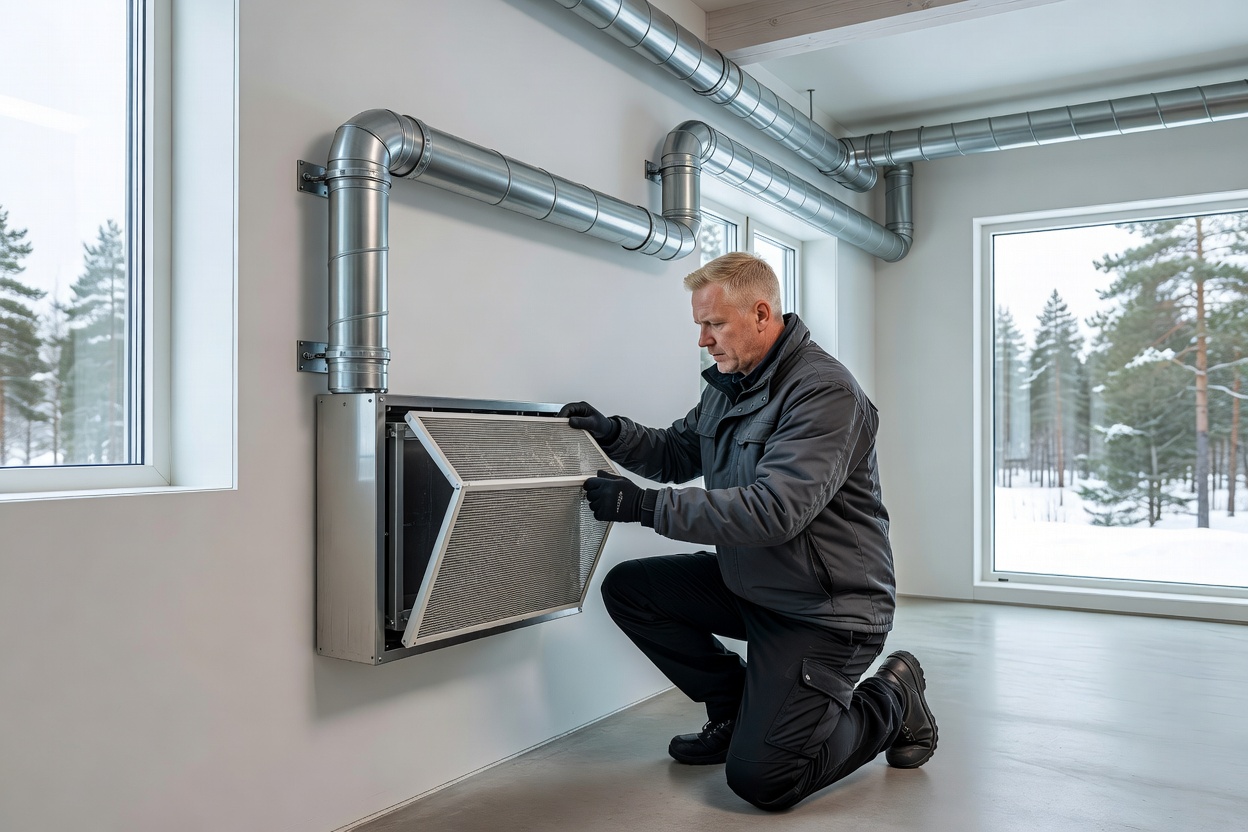
Moisture Awareness and Indoor Ventilation
Because modern Baltic residential construction emphasizes energy efficiency, our homes are wrapped tightly with vapor barriers, triple glazing, and thick stone wool insulation. While this keeps heating bills low, it means indoor moisture generated by cooking, showers, and laundry has nowhere to escape naturally.
If your mechanical heat recovery ventilation (soojustagastusega ventilatsioon) filters are choked with pollen and street dirt, air exchange slows to a crawl. Relative humidity climbs above 60% in winter, causing moisture to condense on cold window corners and perimeter baseboards. Over a single winter, this can foster toxic black mold behind wardrobes.
Preventive maintenance includes checking ventilation intake/exhaust valves, inspecting the heat exchanger core for ice or dirt buildup in late autumn, and replacing filter sets twice annually (spring and autumn).
Gutters, Downpipes, and Roof Drainage
In Northern Europe, water is the primary agent of structural decay. In late autumn, fallen pine needles and birch leaves accumulate in roof gutters. When the first December freezes hit, clogged gutters fill with solid ice dams.
Subsequent snow melts cannot drain down the downpipe and back up beneath the metal flashing, finding its way into eaves, attic insulation, and exterior timber siding. Clearing gutters each October and ensuring downpipe splash blocks direct discharge at least 1.5 meters away from foundation walls prevents thousands of euros in moisture damage.
Windows, Doors, and Weatherstripping
Most modern homes throughout Estonia, Latvia, and Lithuania feature tilt-and-turn window hardware (Roto, Siegenia, or Maco). These intricate perimeter mechanisms lock window sashes at multiple points against rubber gaskets.
Over time, settling buildings and temperature extremes cause hardware to lose alignment. If the sash sags by even 2mm, cold air seeps in, and the handle becomes stiff to operate. Routine maintenance requires:
- Applying a drop of acid-free machine oil or silicone spray to all metal locking cams and hinge points once a year.
- Wiping rubber weatherstripping clean and applying silicone emulsion so gaskets stay supple and don't freeze shut and tear in sub-zero weather.
- Switching the locking pins between "summer" and "winter" compression modes to increase gasket pressure during windy cold months.
Appliance-Area and Wet-Room Checks
Washing machines, dishwashers, and water heaters are the leading causes of indoor apartment flooding. Preventive maintenance includes checking the flexible braided supply hoses behind appliances every twelve months for bulging or green copper oxidation.
In bathrooms, inspect the silicone bead around shower corners. If the silicone has pulled away from the tile or shows black spots beneath the surface, moisture is penetrating behind the sealant. Cutting out old silicone, sanitizing the joint with alcohol, and running a fresh sanitary silicone bead takes an hour and prevents water from soaking into screed layers beneath.
A Responsible Boundary: When Specialist Inspection is Required
While homeowner checks prevent common problems, maintenance advice is not a substitute for certified technical inspections where life safety is concerned:
- Chimneys and Wood Stoves: Regional fire safety laws mandate periodic inspection and sweeping by a licensed chimney sweep (korstnapühkija / skursteņslauķis).
- Gas Boilers and Flues: Annual servicing of gas heating equipment must be performed by registered gas technicians with combustion analysis meters.
- Structural Cracks: Foundation movement or severe timber rot requires an assessment from a qualified structural engineer.